
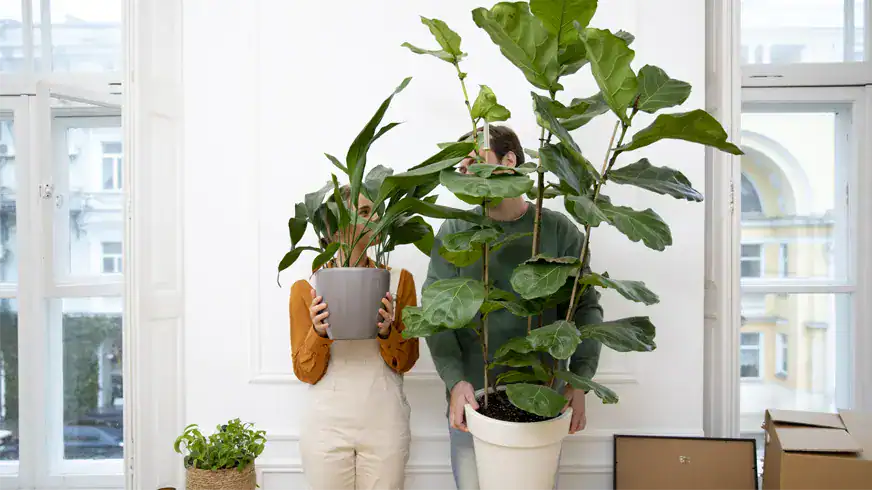
Moving to a new home can be exciting, but for plant lovers, it comes with its own set of challenges. Your beloved plants, whether they’re lush houseplants or beautiful flowers, need special care to survive the journey. If you’re also moving to a new apartment, check out our ultimate apartment packing list to ensure you’re well-prepared for the whole move.
Moving plants, especially long distances or across state lines, requires preparation and careful planning. In this guide, we’ll walk you through the best practices for packing, transporting, and ensuring the well-being of your plants during the move. Whether you’re moving across the country or just to a new apartment, these tips will help your plants thrive in their new home.
1. Repot in Plastic Pots
A few weeks before moving, transfer your plants from heavy ceramic pots to lightweight plastic ones. This reduces weight and prevents soil spillage during transit.
2. Water Wisely
Water your plants a few days before the move. Ensure the soil is moist but not soggy to prevent root rot.
3. Wrap Roots
Cover the roots with damp paper towels and secure them with plastic wrap or a plastic bag to retain moisture.
4. Protect Foliage
Gently wrap the leaves and stems with newspaper or tissue paper to cushion against bumps and prevent breakage.
5. Secure in Boxes
Place each plant in a sturdy box that’s just slightly larger than the pot. Fill any gaps with crumpled newspaper or packing paper to prevent movement. Label the box with “Live Plant” and “This Side Up” stickers.
How to Move Plants Cross-Country
Moving plants cross-country can be tricky, especially when relocating to states with extreme climates. For example, if you’re moving from New Jersey to Florida, you’ll want to consider the plant-friendly environment. Check out our guide on moving to florida from New Jersey for tips on adjusting your plant care to a new climate.”
1. Legal Considerations
Check for any state-specific regulations regarding plant transportation. Some states have restrictions to prevent the spread of pests and diseases.
2. Choose the Right Transportation
If possible, transport plants in your own vehicle to monitor their condition and adjust as needed.
3. Plan for Overnight Stops
If your journey spans multiple days, bring plants indoors during overnight stays to protect them from extreme temperatures.
4. Avoid Shipping with Movers
Many moving companies won’t transport plants due to liability and state regulations. It’s safer to handle them yourself.
🌱 Moving Lots of Plants
1. Group Similar Plants
Group plants with similar care needs together to simplify maintenance during the move.
2. Use Large Containers
For multiple small plants, consider using large plastic bins with ventilation holes. Line the bottom with newspaper and arrange plants upright.
3. Stagger Packing
Pack plants over several days to avoid last-minute stress and ensure each plant receives proper attention.
4. Seek Assistance
If moving a large number of plants feels overwhelming, consider enlisting the help of friends or professional plant movers.
How to Transport Flowers in a Car
1. Use a Bucket: Place floral arrangements in a bucket filled with water to keep stems hydrated. Secure the bucket upright on the floor of your car.
2. Cushion Arrangements: Surround the flowers with soft materials like towels or blankets to prevent movement and damage.
3. Avoid Direct Sunlight: Keep flowers out of direct sunlight and away from heat sources to prevent wilting.
4. Handle with Care: Drive cautiously to avoid sudden stops or sharp turns that could damage the flowers.
Additional Tips
- Acclimate Gradually: Once at your new home, place plants in a shaded area for a few days before introducing them to direct sunlight.
- Monitor Health: Keep an eye on your plants for signs of stress, such as yellowing leaves or drooping. Adjust care routines as needed.
- Consult Professionals: For valuable or delicate plants, consider consulting a professional plant mover for advice and assistance.
Conclusion
Moving plants doesn’t have to be a stressful task if you follow the right steps. By properly packing your plants, choosing the right transportation, and providing them with adequate care, you can ensure they arrive at your new home healthy and ready to flourish. Whether you’re moving a single plant or a whole collection, careful preparation is key. By planning ahead and using the tips provided, you’ll make sure your plants survive the journey and continue to grow in their new space. Happy moving, and here’s to a greener future in your new home!
FAQs About Moving Plants
1. How do I prepare my plants for a long-distance move?
To prepare your plants for a long-distance move, it’s important to repot them into plastic pots, water them a few days before the move, and wrap the roots in damp paper towels. Packing them securely in sturdy boxes with cushioning materials will protect them from damage during transi
2. Can I ship plants through the mail or with movers?
Many moving companies and shipping services do not allow plants due to state regulations and restrictions. It’s generally safer to transport plants yourself in your own vehicle, where you can monitor their condition and adjust care as needed.
3. What’s the best way to transport plants in a car?
For short distances, place your plants in a stable spot in the car where they won’t tip over. Use a bucket for flowers and secure them upright with soft materials like towels. Avoid direct sunlight and keep the car cool to prevent the plants from wilting.
4. How do I move a large collection of plants?
When moving lots of plants, group them by care needs, pack them in large plastic bins with ventilation holes, and stagger your packing over several days. You may also want to consider enlisting professional plant movers if you have a particularly large collection.
5. How can I ensure my plants survive the move to a new apartment?
To ensure your plants thrive in your new apartment, place them in a shaded area for a few days before introducing them to direct sunlight. Keep an eye on their condition and adjust watering and care routines as needed to help them acclimate to their new environment.