
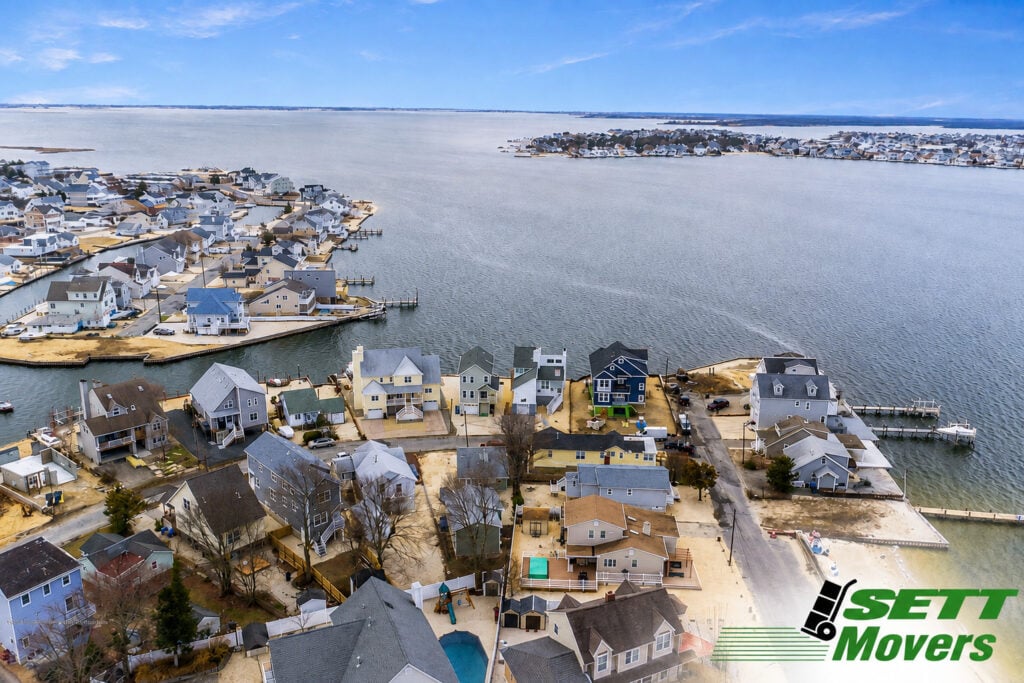
Brick Township sits in Ocean County along the western shore of Barnegat Bay, directly across the water from the barrier island towns most people picture when they think of the Jersey Shore. It borders Toms River to the south and west (a town we’ve covered extensively in our moving to Toms River guide, and our broader Ocean County content), and it sits just minutes from the Garden State Parkway, which makes it accessible whether you’re commuting north toward Newark and New York or heading south toward Atlantic City. What many people don’t realize until they start researching the area is that Brick is one of the largest townships in Ocean County by population, consistently ranking among the most populated municipalities in all of New Jersey. That size matters, because Brick isn’t a single neighborhood with a single character. It’s a collection of distinct communities stitched together under one municipal government, and understanding that distinction is the key to figuring out whether Brick is the right fit for your household.
Brick also functions as both a year-round residential community and a seasonal destination. It’s not a classic tourist town the way Point Pleasant Beach or Seaside Heights are, but it still absorbs an influx of visitors each summer who use Brick as a base for accessing nearby beaches and marinas. That seasonal rhythm affects traffic patterns, restaurant wait times, and even how crowded local parks and shopping centers feel from Memorial Day through Labor Day. If you’re moving from a more landlocked area, it’s worth picturing how your daily routine might shift between the quiet of winter and the livelier pace of summer.
Cost of Living in Brick, NJ: Real Numbers You Should Know
If you’re relocating from a lower-cost state or from many parts of the Midwest and South, the cost of living in Brick, NJ will register as a meaningful adjustment. According to Salary.com data, Brick’s overall cost of living runs roughly 30 percent or more above the national average, and housing is the primary driver of that gap. Monthly housing costs for a single person in Brick land around $1,250, while a family of four should budget closer to $2,300 per month for housing alone. Those figures shift depending on whether you’re renting or buying, and they move quickly in this market, so treat them as a baseline rather than a ceiling.
On the home purchase side, median home prices in Brick have climbed steadily, reflecting broader demand for Ocean County communities that offer water access, good highway connections, and relative affordability compared to the barrier island towns themselves. Buyers coming from North Jersey or New York City often find Brick’s single-family homes and townhouses relatively approachable, while those coming from the Southeast or interior states may experience sticker shock. Renters will find inventory tighter in certain neighborhoods, particularly the waterfront lagoon sections, where single-family homes dominate and rental supply is limited. Apartment-style rentals are more common closer to Route 70 and the township’s commercial corridors, generally at more accessible price points.
The number that surprises out-of-state buyers most consistently is New Jersey’s property tax burden. New Jersey carries one of the highest effective property tax rates in the country, and Ocean County is no exception. Buyers who run their mortgage calculations carefully sometimes underestimate property taxes by thousands of dollars per year. When you’re budgeting for a move to Brick, build the full property tax figure into your monthly payment estimate from day one, not as an afterthought. Your real estate agent should be able to pull the current annual tax bill for any specific property, and that number deserves as much attention as the list price itself.
Beyond housing, everyday expenses in Brick are broadly in line with other suburban communities along the Jersey Shore corridor. Groceries and household goods tend to track slightly above national averages, especially if you prefer name brands, but warehouse clubs and discount retailers can help keep costs manageable. Utility bills reflect the Northeast climate: winters are cold enough that heating oil or natural gas costs are real line items, while summers bring air-conditioning expenses, particularly in older homes that aren’t as energy-efficient. Transportation costs vary with your commute, but tolls on the Garden State Parkway and occasional bridge crossings into nearby beach towns can add up over time.
Healthcare and childcare are two more categories worth factoring into any cost-of-living calculation. Brick and the surrounding area are served by several major health systems, and while insurance coverage and employer benefits will drive your out-of-pocket costs, copays and premiums here may run higher than what you’re used to in lower-cost states. Childcare, including daycare centers and after-school programs, is competitive and can be relatively expensive, especially for infants and toddlers. Families planning a move to Brick should research waitlists and typical rates long before their moving date to avoid last-minute surprises.
Best Neighborhoods in Brick, NJ: Who Each Area Actually Suits
This is where a generic moving guide falls short, because Brick’s internal geography is genuinely unusual. The township contains neighborhoods that feel nothing like each other, and choosing the right section of Brick is almost as important as choosing Brick over an adjacent town. Here’s an honest breakdown of the major sections and the type of buyer or renter each one tends to suit.
Waterfront and Lagoon Communities: Cherry Quay, Bay Harbor, Baywood, and Sailors Quay
The waterfront and lagoon neighborhoods in Brick draw the most attention from buyers who want true water access without paying full barrier-island prices. Cherry Quay, Bay Harbor, Baywood, and Sailors Quay are built around an intricate network of man-made lagoons that feed into Barnegat Bay. Many homes in these communities come with private docks, boat lifts, or direct bulkhead access, which is a major draw for boaters, paddleboarders, and anyone who prioritizes time on the water over yard size.
Architecturally, you’ll find a mix of older single-story ranches, raised bungalows that were elevated after Superstorm Sandy, and newer, larger construction designed to maximize bay views. Streets can feel narrow and quiet, with limited through-traffic, which many full-time residents appreciate. At the same time, some properties are used seasonally, so the population in these neighborhoods can feel more transient, especially on streets with a concentration of second homes. If you’re looking for a neighborhood where you know every neighbor year-round, it’s worth asking how many homes are occupied full-time versus seasonally.
The trade-offs here are fairly clear. On the plus side, you gain a unique lifestyle: the ability to launch a kayak from your backyard, watch sunsets over the water, or live just minutes by boat from popular spots on the bay. On the downside, budget for higher flood insurance premiums, stricter building regulations, and the ongoing maintenance that comes with owning a waterfront property, such as bulkhead repairs and dock upkeep. Noise levels can also spike on summer weekends when boat traffic increases and friends and family visit from out of town.
Herbertsville and Northern Brick: Suburban Feel with Quick Highway Access
The northern sections of Brick, often grouped under the broader label of Herbertsville, appeal to buyers who want a more traditional suburban feel without sacrificing access to major roads. This part of town is framed by the Garden State Parkway and Route 70, making it especially convenient for commuters heading toward North Jersey or Philadelphia. Streets tend to be wider, lots are often a bit deeper than in the lagoon areas, and many homes were built during the mid- to late-20th century, giving the neighborhood a classic, established character.
Herbertsville offers a mix of single-family homes, split-levels, and Cape Cod style houses, along with a few pockets of newer construction and some age-restricted communities. Sidewalks are more common here than in some of the waterfront sections, and you’ll see more joggers, dog walkers, and kids on bikes, particularly around local schools and parks. For households that prioritize a backyard over water access, or want to avoid the complexities of flood zones, Herbertsville often ends up on the short list.
One thing worth noting: northern Brick backs up to both undeveloped land and neighboring townships, so certain streets feel surprisingly quiet and woodsy, while others sit closer to commercial corridors. As you compare listings, pay attention to where each home falls on that spectrum. A house that looks nearly identical on paper can feel very different in person depending on whether it backs onto trees, a busy road, or a small local business strip.
Midtown and Commercial Corridors: Convenience Above All Else
Closer to the center of town, around Route 70, Route 88, and Brick Boulevard, you’ll find Brick’s commercial spine. This area includes shopping centers, big-box retailers, restaurants, medical offices, and a concentration of apartment complexes and townhome communities. People who choose to live here are often driven by convenience: being within a few minutes of grocery stores, pharmacies, and everyday services is a serious advantage if you have a demanding job or limited time for errands.
Housing in this corridor ranges from older garden-style apartments to more modern, amenity-rich rental communities. You’ll also find clusters of attached townhomes and some smaller single-family homes on side streets that feel distinctly more residential than the main roads suggest. Noise and traffic are realities you have to accept in this part of Brick, particularly during rush hours or peak shopping periods, but in exchange you may gain shorter drives, lower maintenance responsibilities, and easier access to public transportation options.
Residential Pockets Near the Bay: Secluded but Not Isolated
In addition to the well-known lagoon developments, Brick includes several residential pockets closer to the open bay that aren’t strictly lagoon-based. These areas offer a blend of water proximity and a calmer residential feel, with homes set back from main roads and mature trees providing a sense of privacy. Streets here are often winding rather than grid-like, which contributes to a more secluded atmosphere without leaving you far from schools, shopping, or major routes.
These neighborhoods tend to attract long-term residents who value a quieter environment while still wanting to be within a reasonable drive of both the shore points and inland job centers. If your ideal day includes walking your dog along a quiet side street and then driving ten minutes to launch a boat or meet friends at a waterfront restaurant, these bay-adjacent pockets may be worth serious consideration. That said, review flood maps and insurance requirements carefully. Proximity to the bay, even without direct water frontage, can influence both your risk profile and your long-term costs.
Schools, Parks, and Everyday Quality of Life in Brick
For many potential residents, especially families, the decision to move to Brick hinges as much on schools and amenities as on housing. Brick Township Public Schools operates several elementary schools, two middle schools, and two high schools, offering a range of academic and extracurricular programs. As with any district, school performance and reputation can vary by individual building, so it’s worth looking up recent report cards, visiting campuses when possible, and talking to current parents to get a nuanced view rather than relying on a single rating website.
Parks and recreation are a strong point for Brick. The township maintains a network of neighborhood parks, playgrounds, and athletic fields, along with larger destinations like Brick Reservoir and Windward Beach Park. Brick Reservoir offers walking trails and scenic views, while Windward Beach Park provides bayfront access, concerts, and community events during the warmer months. These public spaces play a large role in community life, especially for residents who don’t live in waterfront neighborhoods but still want regular access to the water and outdoor activities.
Day-to-day living in Brick feels more like life in a typical New Jersey suburb than a transient beach town. You’ll find multiple supermarkets, locally owned restaurants, national chains, medical practices, and service providers covering almost every basic need. During the off-season, the pace is steady but not overwhelming; during the summer, you’ll notice more out-of-town license plates, busier roads, and fuller parking lots, but Brick rarely feels as saturated as the boardwalk-focused communities a few miles east. For many residents, that balance, close to the action but not in the heart of it, is exactly the point.
If you’re coming from a major city, you may initially miss certain urban conveniences, such as extensive public transit or a dense concentration of cultural venues within walking distance. Regional attractions, including theaters, concert venues, and malls, are reachable within a 30 to 45-minute drive, and New York City or Philadelphia can be reached for day trips via a combination of driving and rail connections from nearby stations. Over time, many transplants find that Brick’s blend of suburban comfort, water access, and regional connectivity strikes a practical middle ground between city intensity and rural quiet.